

E-Commerce E-commerce, also known as electronic commerce, refers to the buying and selling of goods and services over the internet. It has been a game-changer for businesses and consumers alike, as it has completely transformed the way people shop and do business. It has become a popular alternative to traditional brick-and-mortar stores, as it provides a convenient and efficient way to buy and sell goods and services. It’s growth has been driven by advances in technology and the widespread adoption of the internet. Today, e-commerce is a global phenomenon, with millions of businesses selling products and services online. Benefits One of the main advantages of e-commerce is that it provides businesses with the ability to reach a wider audience. Traditional brick-and-mortar stores are typically limited by their geographic location, but with e-commerce, businesses can sell their products and services to anyone, anywhere in the world. This has led to the rise of online marketplaces, such as Amazon and eBay, which have become popular destinations for shoppers around the world. Another advantage of e-commerce is that it allows businesses to reduce their overhead costs. Businesses can eliminate the need for expensive retail space, which can be a significant expense for traditional brick-and-mortar stores. In addition, e-commerce allows businesses to automate many of their processes, such as inventory management and order processing, which can help to reduce labor costs. E-commerce has also made it easier for consumers to shop and compare products. Consumers can easily search for and compare products from multiple retailers, which can help them find the best deals and save money. In addition, it provides consumers with the convenience of shopping from home, which can save them time and eliminate the need to visit multiple stores. Challenges Despite its many benefits, e-commerce does come with some challenges. One of the main challenges is the issue of trust. With so many online retailers, it can be difficult for consumers to know which businesses are legitimate and which are not. To address this issue, many e-commerce businesses have implemented security measures, such as SSL encryption and secure payment systems, to ensure that their customers’ personal and financial information is protected. Another challenge is the issue of logistics. With online orders, businesses need to ensure that their products are delivered on time and in good condition. This can be a complex process, as it involves coordinating with shipping carriers and managing inventory levels. To address this challenge, many businesses have partnered with logistics companies to help manage their shipping and fulfillment operations. Opportunities E-commerce is also changing the way businesses market and advertise their products. Businesses can use a variety of digital marketing channels, such as social media, email marketing, and search engine optimization, to reach their target audience. This has led to a shift in advertising budgets away from traditional media, such as television and print, towards digital media. In addition, it has opened up new opportunities for businesses to collect and analyze data about their customers. With e-commerce, businesses can track their customers’ browsing and purchasing behavior, which can help them make informed decisions about their product offerings and marketing strategies. This has led to the rise of data-driven marketing, which uses data analysis to optimize marketing campaigns and improve customer engagement. As it continues to grow, it is likely that we will see further innovations and developments in this field. One area of particular interest is the use of artificial intelligence and machine learning to improve the e-commerce experience for both businesses and consumers. For example, AI could be used to personalize product recommendations based on a customer’s browsing and purchasing history, or to automate customer service interactions. How it is helpful for Youth E-commerce can be very helpful for young generations in several ways: In summary, e-commerce can be a great tool for young people to save time and money, access a wider range of products, and even start their own businesses. Submitted by Uzair Ahmed
What is Digital Economy and Its Growth 1
Digital Economy The digital economy refers to the economic activity that results from billions of daily online connections among people, businesses, devices, data, and processes. It refers to a new era of economic growth, driven by the Internet and related digital technologies, which are changing the way people live and work. The digital economy is a rapidly growing and evolving space that has completely transformed the way businesses operate and compete. From e-commerce and online marketplaces to social media and cloud computing, the digital economy encompasses a wide range of activities and technologies. The term “digital economy” was first introduced in the late 1990s and has since become a critical component of the global economy. Growth and Development In the digital economy, information and communication technologies (ICTs) play a central role in facilitating economic growth and development. The widespread adoption of these technologies has enabled businesses and individuals to access vast amounts of information and connect with others in real-time, regardless of their location. This has led to the creation of new business models and markets, and has transformed the way goods and services are produced and consumed. Innovation and Collaboration One of the key features of the digital economy is its emphasis on innovation and collaboration. The digital economy fosters innovation by enabling businesses and individuals to quickly and easily share ideas, knowledge, and information. This, in turn, helps drive the development of new technologies, products, and services. Additionally, the digital economy encourages collaboration between businesses, governments, and individuals, as well as between countries, by breaking down traditional barriers to communication and collaboration. Global Economy The digital economy is also characterized by its global reach. Businesses and individuals can participate in the digital economy from anywhere in the world, providing new opportunities for economic growth and development. The digital economy has created new markets and has increased access to goods and services, making it easier for people to participate in the global economy. In recent years, the digital economy has grown at an unprecedented pace, driven by advances in technology, increasing Internet connectivity, and the rise of mobile devices. The growth of the digital economy has created new job opportunities and has also helped to drive economic growth and development in many countries. Benefits of Digital Economy Despite its many benefits, the digital economy also presents some challenges. For example, the rapid pace of technological change has created new risks and challenges for businesses and individuals, particularly in terms of data privacy and security. Additionally, the digital economy has created a new digital divide, with some countries and individuals having limited access to digital technologies and the Internet, which can limit their ability to participate in the digital economy. Overall, the digital economy has had a profound impact on the global economy, transforming the way businesses and individuals interact and participate in the global marketplace. As the digital economy continues to evolve, it will likely continue to drive innovation, growth, and development for many years to come. User of Digital Economy in Pakistan In recent years, Pakistani’s government has shifted its focus towards digitisation and building a knowledge economy. Multiple concerned ministries, regulatory bodies, ad hoc committees, and task forces are working hard to facilitate digital transformation within the country. With over 64% of Pakistan’s population being under the age of 30, there is enormous potential for successful digital adoption, however, Pakistan continues to lag behind. As efforts are being made to speed up digitisation, regulatory concerns have become ever more pressing, including regulations around cloud computing, data protection, and cyber security. Balancing protective regulation with an environment that encourages innovation and digitisation, will enable Pakistan to make the most of new technologies. CERP Policy Advisory works with local and international stakeholders to develop a deep understanding of the policy and regulatory landscape in Pakistan and advise on high impact policy reforms to enable digital transformation. Submit by: Uzair Ahmed

Search Engine Optimization (SEO)
What is SEO? Search Engine Optimization (SEO) is the process of optimizing a website to improve its ranking in search engine results pages (SERPs) and increase its visibility and traffic. The ultimate goal of SEO is to attract more organic traffic to your site, which can result in increased leads, sales, and brand recognition. Optimizations SEO involves a combination of on-page and off-page optimization techniques that aim to make your website more attractive to search engines. On-page optimization refers to the changes you can make to your website content and structure, while off-page optimization refers to the actions you can take outside of your website to improve your search engine ranking. On-page optimization On-page optimization involves making changes to your website’s content and structure to make it more search engine friendly. This includes optimizing your page titles, meta descriptions, header tags, and keywords to help search engines understand the content of your site. Additionally, you can improve your website’s navigation and internal linking structure to make it easier for search engines and users to find what they are looking for. Another important aspect of on-page optimization is creating high-quality, original content that provides value to your users. Search engines favor websites that publish fresh, relevant, and engaging content, as this signals to them that your site is active and up-to-date. Additionally, incorporating keywords into your content can help improve your search engine ranking for those terms. Off-page optimization Off-page optimization refers to the actions you can take outside of your website to improve your search engine ranking. This includes building backlinks to your site, which are links from other websites that point to your site. Search engines view backlinks as a sign of authority and credibility, and they use this information to rank your site higher in search engine results. There are several ways to build backlinks to your site, including guest blogging, creating infographics, and participating in online communities related to your niche. Additionally, social media can also play a role in off-page optimization, as social signals, such as shares and likes, can indicate the popularity and relevance of your content. Another important aspect of off-page optimization is local SEO. If your business has a physical location, it is important to optimize your website for local search. This involves claiming your Google My Business listing, creating local citations, and optimizing your website for local keywords. By doing this, you can increase your visibility in local search results and attract more customers to your business. It is important to note that SEO is a long-term strategy, and results may not be immediate. However, by implementing best practices and regularly updating your site with fresh, relevant content, you can improve your search engine ranking over time. Conclusion In conclusion, Search Engine Optimization is a crucial component of any digital marketing strategy. By optimizing your website for search engines, you can increase your visibility and attract more organic traffic to your site, which can result in increased leads, sales, and brand recognition. By implementing both on-page and off-page optimization techniques, you can improve your search engine ranking and attract more customers to your business. Remember, SEO is a long-term strategy, and results may not be immediate, but with persistence and dedication, you can achieve the results you desire. Submitted by Uzair Ahmed
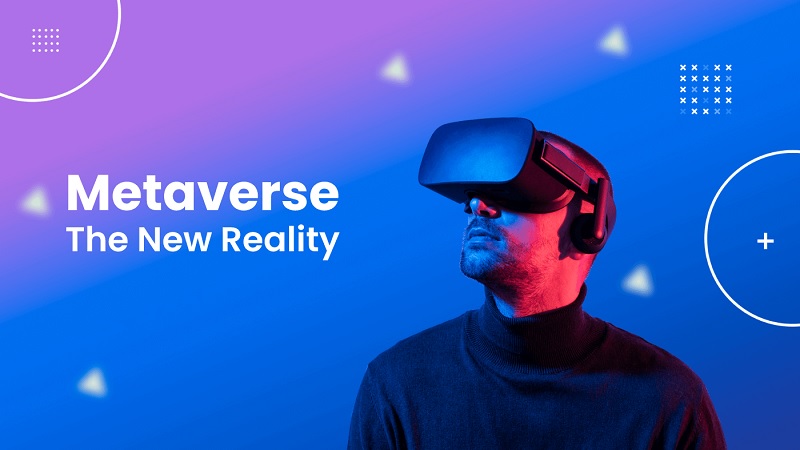
What is Metaverse?
Defining Metaverse The Metaverse is a term that has been gaining popularity in recent years, and refers to a virtual universe that acts as a collective space for people to interact, communicate and transact. It is a shared and interconnected virtual world that is created by the convergence of real and virtual reality. The Metaverse is not a new concept, it was first popularized by science fiction author Neal Stephenson in his novel “Snow Crash”. In the novel, the Metaverse is a virtual world that is inhabited by millions of people and is considered a parallel universe to the real world. Accessibility The concept of the Metaverse has evolved since its inception, and now refers to a virtual reality that is accessible to anyone with a computer and an internet connection. In the Metaverse, people can create and control their own digital avatars, interact with others in real-time, and participate in various virtual activities such as gaming, shopping, socializing and even working. The Metaverse is not limited to a single virtual world, it can be made up of multiple interconnected virtual realities, each with its own unique rules, environment, and experience. The development of the Metaverse is being driven by advancements in technology, particularly in the fields of virtual reality, augmented reality, and blockchain. Virtual reality technology is providing a more immersive and interactive experience for users, while blockchain is enabling secure and decentralized transactions within the Metaverse. With the integration of these technologies, the Metaverse has the potential to become a new global network that offers a range of benefits to its users. Benefits Interaction with People One of the most significant benefits of the Metaverse is the ability for people to interact with each other in a virtual environment that transcends geographical and physical boundaries. This opens up new possibilities for social interaction and communication, allowing people from all over the world to connect with each other in ways that were previously impossible. In the Metaverse, people can join virtual communities, attend virtual events, and even participate in virtual concerts and performances. Commerce & Trade Another benefit of the Metaverse is that it provides a new platform for commerce and trade. In the Metaverse, people can buy and sell virtual goods and services using digital currencies, enabling a new level of economic activity. This opens up opportunities for businesses to reach new customers and expand their markets, while also creating new job opportunities in areas such as virtual event planning, virtual real estate development, and digital content creation. Privacy The Metaverse is also seen as a potential solution to the issue of online privacy and security. With the decentralization of data storage and transactions through blockchain technology, the Metaverse offers a more secure and transparent environment for its users. This reduces the risk of data breaches, hacking, and other malicious activities, ensuring that users’ personal information is protected and their transactions are secure. In addition to the benefits mentioned above, the Metaverse also has the potential to revolutionize the way we live and work. In the Metaverse, people can work and collaborate with others from anywhere in the world, reducing the need for physical office spaces and commuting. This opens up opportunities for remote work and telecommuting, which can have a positive impact on the environment and people’s quality of life. Disadvantages Metaverse has the potential to offer numerous benefits, there are also several disadvantages that need to be considered. Regulation and Governance Main concern is the issue of regulation and governance. In the Metaverse, the rules and policies governing behavior and transactions are not clearly defined, making it difficult to enforce laws and prevent negative behaviors such as cyberbullying and fraud. This lack of regulation and oversight can also create a hostile environment where users are at risk of exploitation and abuse. Time The issue of addiction is another disadvantage of the Metaverse. With the ability to immerse oneself in a virtual world, people may spend excessive amounts of time in the Metaverse, neglecting real-life responsibilities and relationships. This can lead to a loss of touch with reality, causing harm to both the individual and their relationships. Financial aspect The financial aspect of the Metaverse is another area of concern. In the Metaverse, people can buy and sell virtual goods and services using digital currencies, which raises concerns about the stability of the virtual economy and the potential for speculative bubbles and market crashes. In addition, the use of digital currencies raises questions about the security of transactions and the potential for fraud and theft. Finally, the Metaverse has the potential to create a new form of social and cultural isolation. In the Metaverse, people can create and control their own digital avatars, which allows them to present a version of themselves that is not necessarily representative of their true identity. This can lead to a situation where people are more comfortable interacting with others in the Metaverse than in real life, causing them to withdraw from real-life relationships and interactions. Conclusion In conclusion, while the Metaverse has the potential to offer numerous benefits, there are also several disadvantages that need to be considered. These include the issue of accessibility, privacy and security, regulation and governance, addiction, financial stability, and social and cultural isolation. It is important for those who are involved in the development of the Metaverse to address these concerns in order to ensure that the Metaverse is a safe, accessible, and positive environment for everyone. Submitted by Uzair Ahmed
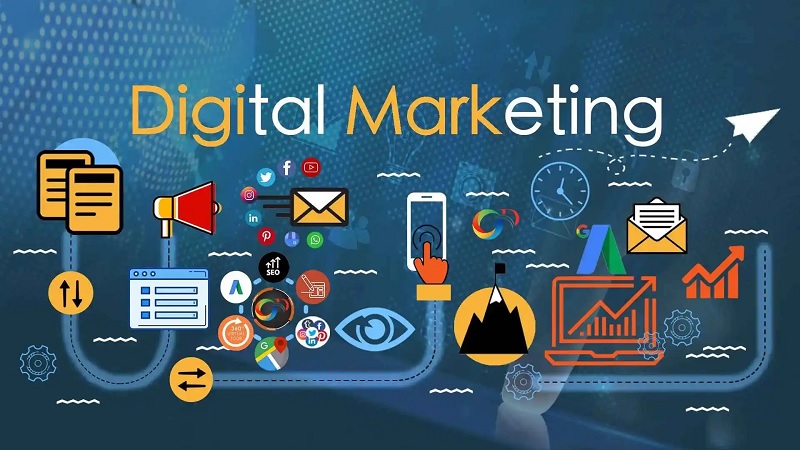
What is Digital Marketing?
Digital Marketing Digital marketing is a type of marketing that makes use of digital technologies, including the internet, mobile devices, social media platforms, search engines, and other digital channels to reach and engage with customers. It is a modern way of promoting products and services to a global audience and has become an essential aspect of any marketing strategy. The digital landscape has changed dramatically over the past decade, and businesses are now required to adapt their marketing strategies to keep up with the changes. Traditional marketing methods such as print, radio, and television advertisements are still being used, but digital marketing has become the primary means of reaching and engaging with customers. Benefits One of the biggest advantages of digital marketing is that it allows businesses to reach a large number of people quickly and efficiently. Digital marketing strategies can be tailored to specific target audiences, making it easier for businesses to reach the people who are most likely to be interested in their products and services. This is because digital marketing allows for the collection of data about customer behavior, preferences, and purchasing habits, which can be used to inform marketing strategies and improve their effectiveness. One more benefit of advanced showcasing is that it is financially savvy. Traditional marketing methods can be expensive, especially for small businesses, and often require large upfront investments. In contrast, digital marketing is more affordable and allows businesses to reach their target audience at a lower cost. This is because digital marketing allows for the targeting of specific groups of people and the use of various tactics to reach them, such as search engine optimization (SEO), pay-per-click advertising (PPC), social media advertising, and email marketing. Marketing Strategies SEO SEO is a digital marketing strategy that involves optimizing a website for search engines like Google. The goal of SEO is to increase the website’s visibility in search engine results pages (SERPs) and to attract more traffic to the site. This is achieved by using keywords that people are searching for and including them in the website’s content and meta data. PPC PPC advertising is another digital marketing strategy that involves placing ads on search engines, social media platforms, and other websites. The ads are shown to users who are searching for keywords related to the products or services being advertised. The advertiser only pays when a user clicks on their ad, hence the name “pay-per-click.” Social Media Advertising Social media advertising is another popular digital marketing strategy that involves placing ads on social media platforms such as Facebook, Twitter, Instagram, and LinkedIn. These ads can be targeted to specific groups of people based on factors such as demographics, interests, and behaviors. This type of advertising allows businesses to reach a large number of people quickly and effectively and is a cost-effective way to increase brand awareness and drive traffic to a website. E-Marketing Email marketing is a type of digital marketing that involves sending emails to a list of subscribers. The emails can be used to promote products, services, or events, or to provide information about the business. This type of marketing allows businesses to reach their customers directly and can be used to build relationships with customers and increase their loyalty to the brand. Conclusion In conclusion, digital marketing has become an essential aspect of any marketing strategy. It allows businesses to reach a large number of people quickly and efficiently, at a lower cost than traditional marketing methods. It also allows for the collection of data about customer behavior, preferences, and purchasing habits, which can be used to inform marketing strategies and improve their effectiveness. Whether you’re a small business or a large corporation, digital marketing is an effective way to reach your target audience and achieve your marketing goals. Submitted by Uzair Ahmed
PIC Organizes “Mobile Journalism” Training Workshops for Journalists
Islamabad: Pakistan Information Center (PIC) on Wednesday organized a two-day training workshop on “Mobile Journalism” at the Information Service Academy in pursuance of its journalist’s capacity building project directed by the Ministry of Information & Broadcasting. The head of Pakistan Information Center Saghir Watto welcomed the participants and briefed the importance of this media workshop for journalists. Eminent journalists with experience enlightened the participants about the importance of mobile journalism. The trainer Waseem Abbasi deliver his lecture on the technical aspects and the necessary guidelines on the use of mobile for media coverage. Mobile Journalism Waseem Qadri another expert gave the practice tips to operate the mobile for media production. The other speakers Naseem Siddiqui and renowned anchor/analyst Javed Chaudhry discussed the importance of mobile journalism in rising digital media industry. The participants expressed their gratitude to the Federal Minister for Information Ms. Maryam Aurangzeb, Secretary Information Ms. Shahira Shahid and Principal Information Officer Mubasher Hassan, describing the training workshop as very beneficial. The workshop organized regarding mobile journalism will continue on Thursday, February 9, in which important figures in the field of journalism, including the country’s renowned journalist Rauf Klasra, will participate as guest speakers.
How ChatGPT is Helpful for Youth?
ChatGPT is an artificial intelligence language model developed by OpenAI that has the ability to generate human-like text and answer questions with a high degree of accuracy. It has proven to be a useful tool for people from all walks of life, including the youth. In this article, we will discuss how ChatGPT can be beneficial for young people and how it can help them in various aspects of their lives. Education Education: ChatGPT can help students by providing them with instant answers to their questions. This can be particularly useful for students who are conducting research for a project or need help with their homework. It can also be useful for students who are learning a new subject or topic and need clarification on certain concepts. It can provide them with accurate and up-to-date information that they can use to further their knowledge and understanding. Career guidance Career guidance: Young people often face challenges in choosing the right career path. It can help them by providing information on various career options and the skills required for each. It can also help with job search assistance by providing information on job openings and the required qualifications. This information can help young people make informed decisions about their future careers. Mental health Mental health: Mental health is a critical issue for young people, and ChatGPT can play a role in addressing it. For example, ChatGPT can provide information on mental health and wellness, as well as provide resources for those who may need professional help. ChatGPT can also provide a safe and confidential outlet for young people to discuss their mental health concerns and receive support and advice. Personal growth Personal growth and development: ChatGPT can help young people grow and develop by providing them with resources and information on various topics such as self-improvement, relationships, and personal finance. It can also provide guidance on how to set goals and develop habits that support personal growth. Entertainment Entertainment: ChatGPT can also provide entertainment for young people. It can provide information on various topics such as movies, music, books, and video games. It can also provide recommendations for these activities based on the preferences and interests of the user. Accessibility Accessibility: ChatGPT is available 24/7, and young people can access it from anywhere with an internet connection. This makes it a convenient tool for them to use, especially for those who may have limited access to information and resources. Conclusion In conclusion, ChatGPT is a valuable tool for young people in many different aspects of their lives. It can provide them with accurate and up-to-date information, support, and guidance on a wide range of topics. With its accessibility and ability to generate human-like text, ChatGPT has the potential to be a valuable resource for young people as they navigate their way through life. Submitted by Uzair Ahmed
ChatGPT vs AI
ChatGPT vs AI: A Comparative Study ChatGPT vs AI Artificial intelligence (AI) has made a huge impact on the way we live and work, and its influence continues to grow. With the advancement of AI, we now have chatbots, which are computer programs designed to mimic human conversations. One of the most well-known chatbots is OpenAI’s ChatGPT, which has revolutionized the world of AI and chatbots. In this article, we will compare ChatGPT and AI to understand their similarities and differences. Artificial intelligence (AI) First, let’s define AI. AI refers to the simulation of human intelligence in machines that are designed to think and act like humans. It is a branch of computer science that focuses on creating intelligent machines that can perform tasks that would normally require human intelligence, such as speech recognition, decision-making, and problem-solving. AI can be divided into two main categories: narrow AI and general AI. Narrow AI is designed to perform a specific task, while general AI is designed to be as intelligent as a human in all aspects. ChatGPT ChatGPT, on the other hand, is an advanced AI-powered language model developed by OpenAI. It is a transformer-based model that has been trained on a massive dataset of over 45 terabytes of text data. The result is a model that can generate human-like text, answer questions, summarize long articles, and even generate poems. ChatGPT has been trained to perform a variety of tasks, such as language translation, text classification, and text generation. Differences One of the main differences between ChatGPT and AI is their scope. While AI is a broad field that encompasses a wide range of technologies and applications, ChatGPT is a specific type of AI language model designed to perform a specific set of tasks. As a result, ChatGPT is highly specialized and focuses on language processing, while AI can encompass many other areas, such as image and speech recognition. Another difference between ChatGPT and AI is their level of intelligence. AI is designed to be as intelligent as a human, while ChatGPT is designed to perform specific language-related tasks. However, it should be noted that ChatGPT is one of the most advanced AI language models currently available and its ability to generate human-like text is truly impressive. Similarities One of the key similarities between ChatGPT and AI is their reliance on machine learning. Both ChatGPT and AI use machine learning algorithms to learn from data and make predictions. In the case of ChatGPT, it uses a transformer-based neural network to generate human-like text. The model is trained on a large dataset of text data, allowing it to learn the patterns and relationships between words and phrases. This allows ChatGPT to generate text that is highly coherent and resembles human writing. Another similarity between ChatGPT and AI is their potential for practical applications. AI has already made a significant impact in a variety of industries, such as healthcare, finance, and retail. ChatGPT, as a specific type of AI language model, has the potential to revolutionize the way we communicate with computers. It can be used to develop chatbots that can assist with customer service, answer questions, and even generate content. Conclusion In conclusion, ChatGPT and AI are similar in that they both rely on machine learning and have the potential for practical applications. However, they differ in their scope and level of intelligence. ChatGPT is a highly specialized AI language model designed to perform specific language-related tasks, while AI is a broader field that encompasses a wide range of technologies and applications. Regardless of these differences, both ChatGPT and AI have the potential to revolutionize the way we live and work. Submitted by Uzair Ahmed
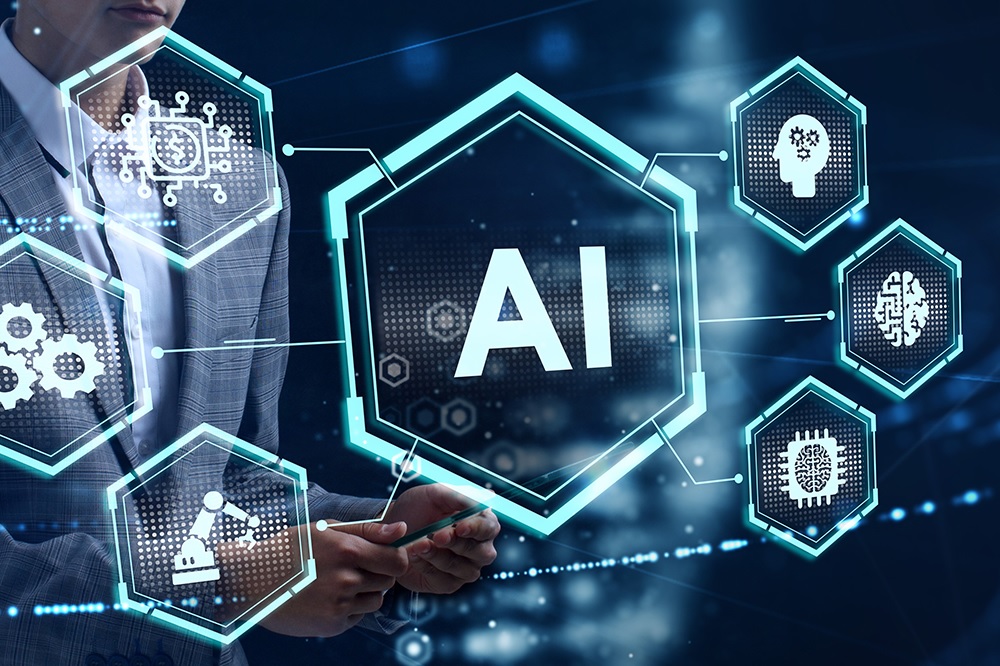
What is Artificial Intelligence?
Introduction Artificial Intelligence (AI) is the field of computer science and engineering that focuses on the development of algorithms and computer systems that can perform tasks that would typically require human knowledge, for example, visual insight, discourse acknowledgment, navigation, and language interpretation. At its core, AI involves creating algorithms and models that allow computers to learn from data, identify patterns and make predictions, allowing them to perform tasks that would otherwise require human intelligence. There are two main categories of AI: narrow or weak AI, which is designed to perform a specific task, and general or strong AI, which is capable of performing any intellectual task that a human can. Key Areas One of the key areas of AI research is machine learning, which involves the development of algorithms that enable computers to learn from data, identify patterns and make predictions. This has led to the development of applications such as self-driving cars, voice-activated personal assistants, and recommendation systems that suggest products or services based on a user’s preferences. Another area of AI research is computer vision, which involves the development of algorithms that allow computers to interpret and understand visual information, such as images and video. This has led to the development of applications such as facial recognition technology and object recognition systems that can be used in security, medical and industrial applications. Benefits One of the benefits of AI is its ability to automate tasks that would otherwise require human intelligence, increasing efficiency and reducing the risk of human error. It has the potential to revolutionize a wide range of industries, from healthcare and finance to retail and transportation. However, there are also concerns about the potential impact of AI on employment and privacy, as well as the ethical implications of creating systems that can make decisions and take actions without human intervention. These issues have led to calls for increased regulation and oversight of the development and deployment of AI systems. Conclusion In conclusion, AI is a rapidly growing field that has the potential to revolutionize many aspects of our lives. While it holds great promise, it is important to ensure that its development and deployment is guided by ethical and responsible principles, so that its benefits can be realized while minimizing its potential negative impacts. Submitted by Uzair Ahmed

What is Space Technology
Space technology has come a long way since the first satellite, Sputnik, was launched in 1957. Today, space technology is used for a variety of purposes, including communication, navigation, and scientific research. In this article, we will explore the various aspects of space technology and its impact on our daily lives. One of the most important applications of space technology is in the field of communication. Satellites are used to transmit and receive signals for television, radio, and telephone services. They also provide internet connectivity to remote and hard-to-reach areas. The use of satellites has greatly improved the speed and reliability of communication, making it possible for people to stay connected regardless of their location. Global Positioning System (GPS) Navigation is another key application of space technology. The Global Positioning System (GPS) is a network of satellites that provides accurate and reliable location information to users. This technology is used in a wide range of applications, including navigation in cars, ships, and airplanes, as well as in agriculture, construction, and search and rescue operations. In addition to communication and navigation, space technology is also used for scientific research. Satellites are used to study the Earth’s climate, weather patterns, and natural resources. They are also used to study other planets, stars, and galaxies in the universe. The data collected by these satellites provides valuable information for scientists and researchers, helping them to better understand our planet and the universe around us. Applications The use of space technology has also greatly improved our ability to monitor and predict natural disasters. Satellites are used to track hurricanes, tornadoes, and earthquakes, providing early warning systems that can save lives. They are also used to monitor changes in the Earth’s environment, such as deforestation and the melting of glaciers. Another important application of space technology is in the field of military operations. Satellites are used for reconnaissance, navigation, and communication in military operations. They are also used to track the movement of enemy troops and weapons, providing valuable information for military strategists. Space technology has also had a significant impact on the field of medicine. Satellites are used to transmit medical data and images, allowing doctors and specialists to consult with one another and provide remote medical care. They are also used to transport medical supplies and equipment to remote areas, improving the availability of medical care in these regions. One of the most exciting and rapidly developing areas of space technology is the use of satellites for commercial purposes. Companies are using satellites to provide internet and television services, as well as to monitor and manage their operations. They are also using satellites to track the movement of goods and cargo, improving logistics and supply chain management. Despite the many benefits of space technology, there are also some challenges that need to be addressed. One of the biggest challenges is the cost of launching and maintaining satellites. It is also important to ensure that the use of space technology does not interfere with other users of the radio frequency spectrum. Additionally, there is a need to ensure that the use of space technology does not contribute to the depletion of natural resources or the degradation of the environment. Conclusion In conclusion, space technology has come a long way since the launch of Sputnik in 1957. Today, it is used for a wide range of purposes, including communication, navigation, and scientific research. It has greatly improved our ability to stay connected, navigate, and understand our planet and the universe around us. However, there are also challenges that need to be addressed, including the cost of launching and maintaining satellites, as well as ensuring that the use of space technology does not interfere with other users of the radio frequency spectrum. Despite these challenges, the future of space technology looks bright, and we can expect to see even more exciting developments in the Submitted by Uzair Ahmed